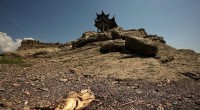
While Mauna Loa is often cited as the largest volcano by volume, it's a shield volcano, not a composite volcano.
Here's why Mauna Kea is considered the largest composite volcano:
* Immense Size: Mauna Kea rises 10,203 meters (33,474 feet) from its base on the ocean floor to its summit, making it the tallest mountain on Earth when measured from base to peak.
* Composite Structure: Mauna Kea is a stratovolcano, meaning it's built up over time by layers of lava flows, ash, and volcanic debris.
* Active History: Although it's currently dormant, Mauna Kea has erupted numerous times in the past, showcasing its typical composite volcano features.
It's important to note that there is some debate within the scientific community about the specific classification of Mauna Kea and whether it's truly a composite volcano. However, it's widely considered to be the largest volcano of this type due to its significant size and composite structure.