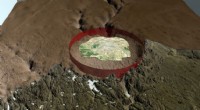
1. Formation of the Earth: The Earth formed from a swirling cloud of dust and gas called a solar nebula. As this material coalesced, it heated up due to gravitational energy and collisions.
2. Melting and Differentiation: The intense heat eventually melted the Earth's interior. Denser materials, like iron and nickel, sank towards the center, forming the core. Lighter materials, like silicon, oxygen, and aluminum, rose to the surface, forming the mantle and crust.
3. Crust Formation: The outermost layer, the crust, formed from the solidified mantle material. This process is called crystallization.
4. Plate Tectonics: The Earth's crust is not a single solid piece but is broken into large plates called tectonic plates. These plates move slowly over the mantle, driven by convection currents, which is the slow movement of the mantle caused by heat from the Earth's core. This movement shapes the Earth's surface through processes like volcanism, earthquakes, and mountain building.
Key Points:
* Density is the main driver of differentiation. Denser materials sink, while lighter materials rise.
* The Earth's layers are still being formed and modified today due to the ongoing activity of plate tectonics.
* The process of planetary differentiation is common throughout the solar system and likely occurred on other rocky planets and moons.
Additional Information:
* The Earth's core is divided into two parts: the solid inner core and the liquid outer core.
* The mantle is the thickest layer and makes up about 84% of the Earth's volume.
* The crust is the thinnest layer and is divided into two types: oceanic crust (thinner and denser) and continental crust (thicker and less dense).
Understanding the Earth's layers is crucial for:
* Understanding the Earth's processes, like earthquakes and volcanoes.
* Learning about the Earth's history and the formation of our planet.
* Exploring the possibility of life on other planets.