1. Mountains:
* Convergent Boundaries: Where plates collide, one plate often subducts (slides) beneath the other. This process can create massive mountain ranges like the Andes Mountains and the Himalayas.
* Continental-Continental Collisions: These collisions create the highest mountain ranges, as neither plate is easily subducted.
2. Volcanoes:
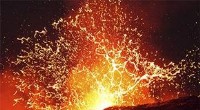
* Convergent Boundaries: Subduction zones create volcanic arcs, chains of volcanoes often parallel to the trench formed by the subducting plate. The Pacific Ring of Fire is a prime example.
* Divergent Boundaries: As plates pull apart at mid-ocean ridges, magma rises from the mantle, creating new oceanic crust and underwater volcanoes. Some of these can eventually rise above sea level to form volcanic islands.
3. Trenches:
* Convergent Boundaries: The deepest parts of the ocean are found at trenches. These are formed where one plate bends and slides beneath another (subduction) during a convergent boundary collision.
Let me know if you'd like to know more about specific types of plate boundaries or the processes that create these features!