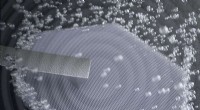
* Underwater: When lava flows into the ocean or another body of water, it cools extremely fast due to the massive temperature difference. This rapid cooling often creates pillow lava formations.
* On Steep Slopes: Lava flowing down a steep slope spreads out quickly, increasing its surface area and allowing for faster cooling.
* Near Glaciers: Lava encountering glaciers or snow will cool very rapidly due to the extreme temperature contrast.
* Within Water-Filled Cracks: Lava flowing into cracks or fissures that are filled with water will cool quickly due to the direct contact with the water.
* In Air (Especially with a High Wind): Even though lava cools relatively slowly in air, a strong wind can increase the rate of cooling by carrying away heat.
It's important to remember that the speed of cooling depends on several factors, including:
* The type of lava: Different lava types (e.g., basalt, andesite) have different cooling rates.
* The amount of water present: The more water, the faster the cooling.
* The surface area exposed: A larger surface area allows for faster cooling.
* The air temperature: Cooler air temperatures will result in faster cooling.
Let me know if you'd like to learn more about any of these factors!