Here's a breakdown:
1. Earth's Structure:
* Crust: The Earth's outermost layer, composed of relatively light and rigid rock. It's broken into large pieces called tectonic plates.
* Mantle: A thick layer of hot, dense rock that lies beneath the crust. The mantle is constantly moving, driven by heat from the Earth's core.
* Core: The Earth's innermost layer, composed of iron and nickel. The core is extremely hot and generates a magnetic field.
2. Plate Tectonics:
* The Earth's crust is divided into a series of rigid plates that move over the mantle. These plates are constantly interacting with each other, resulting in the formation of mountains, volcanoes, and earthquakes.
* The driving force of plate tectonics is convection currents within the mantle. Hotter, less dense material rises, while cooler, denser material sinks, creating a cycle of movement.
* There are three main types of plate boundaries:
* Convergent boundaries: Where plates collide. This can lead to the formation of mountains, volcanoes, and subduction zones (where one plate slides beneath another).
* Divergent boundaries: Where plates move apart. This can lead to the formation of mid-ocean ridges, rift valleys, and new crust.
* Transform boundaries: Where plates slide past each other horizontally. This can cause earthquakes.
3. Evidence for Plate Tectonics:
* Fossil evidence: Identical fossils found on different continents support the idea that continents were once connected.
* Continental fit: The shapes of continents suggest that they were once joined together.
* Seafloor spreading: The discovery of mid-ocean ridges and magnetic striping patterns on the seafloor supports the idea of new crust being formed at divergent boundaries.
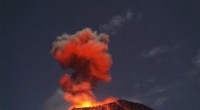
* Earthquakes and volcanoes: These occur along plate boundaries, providing evidence for the movement and interaction of plates.
In summary, plate tectonics is the unifying theory that explains the formation and movement of the Earth's outer surface. It is a dynamic and ongoing process that has shaped the Earth's landscapes and continues to influence our planet today.