Dome Mountains:
* Formation: Formed by the upward pressure of magma pushing against overlying rock layers. The magma doesn't actually erupt, it simply forces the rocks to bulge upwards, creating a dome-like shape.
* Shape: Typically have a rounded, symmetrical dome shape. They can be quite large, covering hundreds of square miles.
* Composition: Made of the same rocks that were originally in the area, though they may be metamorphosed due to the heat and pressure of the magma.
* Examples: Black Hills of South Dakota, the Adirondack Mountains in New York
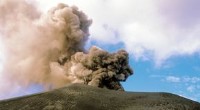
Volcanic Mountains:
* Formation: Formed by the accumulation of lava, ash, and other volcanic materials erupted from a vent in the Earth's crust.
* Shape: Varying shapes depending on the type of eruption and the magma's viscosity. Can be cone-shaped, shield-shaped, or even complex with multiple peaks.
* Composition: Made of volcanic rock, such as basalt, andesite, or rhyolite, depending on the type of magma.
* Examples: Mount Fuji in Japan, Mount Vesuvius in Italy, Mauna Kea in Hawaii
Key Differences:
* Formation Mechanism: Dome mountains are formed by the intrusion of magma, while volcanic mountains are formed by the eruption of magma.
* Composition: Dome mountains are composed of the same rocks as the surrounding area, while volcanic mountains are composed of volcanic rock.
* Shape: Dome mountains are generally round and symmetrical, while volcanic mountains have more varied shapes.
* Volcanic Activity: Dome mountains are not volcanically active, while volcanic mountains are typically formed by ongoing or past volcanic activity.
In summary, dome mountains are uplifted areas of the Earth's crust caused by the pressure of magma below, while volcanic mountains are built up from the materials erupted from a volcano.