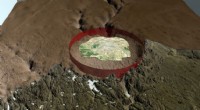
Here's why:
* Groundwater: Water that exists beneath the Earth's surface within the soil and rock layers.
* Flow: Groundwater moves slowly through the soil and rock due to gravity and pressure differences.
* Surface: The top layer of the Earth.
When the groundwater reaches a point where the pressure is high enough to overcome the weight of the overlying soil and rock, it flows out to the surface, forming a spring.
Springs can be found in various locations, including:
* Hillsides: Where groundwater encounters a layer of impermeable rock that forces it to flow out.
* Valleys: Where groundwater is drawn towards the lowest point in the landscape.
* Along coastlines: Where saltwater intrusion forces freshwater to rise to the surface.
Springs are a valuable source of freshwater and are often used for drinking water, irrigation, and other purposes.