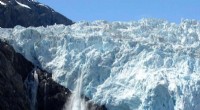
* During the Last Glacial Maximum (LGM), approximately 26,000 to 19,000 years ago, sea levels were much lower due to water being locked up in glaciers. This exposed a land bridge, known as Beringia, connecting Siberia in Asia to Alaska in North America.
* Groups of people, likely originating from Northeast Asia, migrated across Beringia. This migration likely occurred in waves over a long period of time.
* Once the glaciers began to melt and sea levels rose, around 11,000 years ago, Beringia became submerged. However, by this time, people had already established themselves in North America and were migrating further south.
Evidence supporting this theory includes:
* Archaeological evidence: Ancient tools, weapons, and settlements dating back to the Paleo-Indian period have been found in both North and South America, with striking similarities to those found in Northeast Asia.
* Genetic evidence: Genetic studies of Native American populations show a close relationship to populations in Northeast Asia.
* Linguistic evidence: Some similarities exist between languages spoken by indigenous groups in the Americas and those spoken in Northeast Asia.
* Paleontological evidence: Fossil remains of animals, such as the mammoth and bison, that existed in both Beringia and the Americas support the idea of a land bridge.
While the Bering Land Bridge theory is the most widely accepted, it's important to note that:
* There are still debates about the exact timing and routes of migration. Some researchers suggest that people may have arrived in the Americas earlier than previously thought, potentially even before the LGM.
* The theory doesn't explain the full diversity of Native American populations. It's likely that multiple migrations occurred, with people arriving from different regions of Asia and at different times.
Overall, the Bering Land Bridge theory provides a strong framework for understanding the peopling of the Americas, though further research is ongoing to refine our understanding of the complex process.