Here's a breakdown:
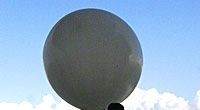
* Early observations: While not specifically identified as a separate layer, early meteorologists and physicists, including Leon Teisserenc de Bort in the late 19th century, began making observations of the atmosphere using weather balloons and studying temperature profiles. They noticed a distinct boundary between the troposphere and stratosphere, but the region above that was still largely unknown.
* The term "mesosphere" came into use: In the early 20th century, researchers like Robert H. Goddard and Sydney Chapman continued studying the upper atmosphere using new technologies like rockets and radio waves. They began to understand the distinct characteristics of the region above the stratosphere and coined the term "mesosphere" around the 1930s.
* Further research and confirmation: Throughout the 20th century, scientists using sounding rockets and later satellites continued to study the mesosphere, mapping its temperature profile, composition, and other features.
Therefore, it's more accurate to say that the mesosphere was revealed through the collective efforts of numerous scientists over several decades, rather than a single individual "discovering" it.