Factors Affecting Growth Rate:
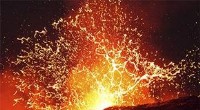
* Eruption Frequency and Intensity: Frequent, explosive eruptions can build volcanoes rapidly. A steady, slow flow of lava can also add significant volume over time.
* Lava Composition: Viscous lava, like that found in stratovolcanoes, tends to build up steep cones. Fluid lava, like in shield volcanoes, spreads out, forming broader structures.
* Eruptive Style: Explosive eruptions deposit ash and pyroclastic flows, contributing to the volcano's height and volume. Effusive eruptions, with lava flows, contribute more to the volcano's base.
* Underlying Magma System: The size and activity of the magma chamber feeding the volcano play a significant role in the eruption rate and overall growth.
* Geological Environment: The stability of the surrounding rock and the presence of erosion or weathering can affect the volcano's preservation and growth.
Examples:
* Fast Growth: Volcanoes like Mount St. Helens in the U.S. can grow rapidly during major eruptions, adding significant height and volume in a relatively short period.
* Slow Growth: Shield volcanoes like Mauna Loa in Hawaii can take millions of years to reach their immense size, with slow, continuous eruptions.
General Time Scales:
* Years to Decades: Significant growth can occur during a single eruption cycle.
* Thousands of Years: Major volcanic edifices can form over this timescale, with multiple eruption cycles.
* Millions of Years: Vast volcanic complexes, like the Hawaiian islands, take millions of years to evolve through the accumulation of lava flows and volcanic activity.
Challenges in Measuring Growth:
* Eruptive History: Reconstructing a volcano's complete eruptive history can be challenging, making accurate growth rate calculations difficult.
* Erosion and Weathering: These processes can remove material from the volcano, making the measured growth rate an underestimate.
* Underlying Structure: The internal structure of the volcano, such as the presence of a caldera or magma chamber, can influence its apparent growth rate.
In Conclusion: Volcanoes grow at diverse rates, influenced by numerous factors. While some can grow rapidly during eruptions, others accumulate mass over millions of years. Understanding the complex interplay of these factors is crucial for studying volcanic evolution and predicting future eruptions.