Glaciers:
* U-shaped valleys: Glaciers carve out wide, U-shaped valleys as they move, eroding the sides and bottom. This is in contrast to the V-shaped valleys carved by rivers.
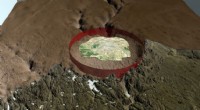
* Cirques: Bowl-shaped depressions at the head of a glacier, often forming a lake at the base.
* Aretes: Sharp, jagged ridges formed between two cirques.
* Horns: Sharp, pyramid-shaped peaks formed where several cirques intersect.
* Moraines: Deposits of rock and sediment left behind by glaciers. There are different types of moraines, including lateral, medial, and terminal moraines, each indicating different stages of glacial retreat.
* Fjords: Deep, narrow inlets formed by glaciers carving out valleys and later being flooded by the sea.
* Drumlins: Elongated, smooth hills of glacial till, often found in groups.
Landslides:
* Talus slopes: Accumulations of loose rock at the base of cliffs or slopes, often formed by rockfalls.
* Debris flows: Fast-moving mixtures of mud, rock, and water that can carve out channels and deposit large quantities of debris.
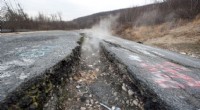
* Landslide scars: Depressions or gaps in the landscape left behind by a landslide.
* Landslide dams: Natural dams formed by landslide debris blocking a river or stream.
* Landslide lakes: Lakes formed behind landslide dams.
Common Features:
* Scree slopes: These are accumulations of loose rock debris on steep slopes. Both glaciers and landslides can contribute to their formation.
* Terraces: Both processes can leave behind terraces, which are flat, step-like landforms.
* Changes in topography: Both glaciers and landslides can dramatically alter the topography of a region, creating new landforms and reshaping existing ones.
Important Note:
While glaciers and landslides share some common features, they operate on different scales and at different speeds. Glaciers carve out features over long periods, while landslides are often sudden and dramatic events.