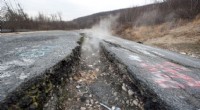
Structural Formations:
* Beds and Strata: Limestone often forms in distinct layers or beds, reflecting changes in depositional environment or sediment supply over time.
* Joints and Fractures: These are cracks or breaks in the rock that can develop due to stress, tectonic activity, or weathering.
* Faults: These are fractures where there has been significant displacement of rock on either side.
Organic Formations:
* Fossils: Limestone is famous for preserving fossils, including shells, bones, and even entire skeletons.
* Stromatolites: These are layered mounds of sediment formed by ancient bacteria.
* Coral Reefs: The accumulation of calcium carbonate skeletons from corals can create massive limestone formations.
Chemical Formations:
* Stalactites and Stalagmites: These are icicle-like formations that develop in caves due to dripping water rich in dissolved calcium carbonate.
* Travertine: A form of limestone deposited by hot springs and mineral-rich waters, often exhibiting a layered structure.
* Oolitic Limestone: This type of limestone is composed of small, spherical grains called ooids, which form when calcium carbonate precipitates around a nucleus.
Other Formations:
* Karst Topography: This unique landscape characterized by sinkholes, caves, and underground drainage systems develops in areas where soluble limestone is exposed to water.
* Cenotes: These are sinkholes that often fill with water, revealing the underlying limestone formations.
* Dolomite: A rock similar to limestone, but containing magnesium carbonate instead of only calcium carbonate.
These are just a few examples of the diverse formations that can be found in limestone. The specific formations present in a given area will depend on the geological history and environmental conditions that have shaped the limestone over time.