1. Formation of Rifts:
- As the plates move away from each other, the crust thins and stretches, creating a rift valley.
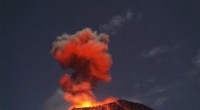
- This valley can be filled with molten rock from the mantle, causing volcanic activity.
2. Creation of New Oceanic Crust:
- Magma from the mantle rises to the surface, cools, and solidifies, forming new oceanic crust.
- This process, called seafloor spreading, gradually widens the ocean basin.
3. Formation of Mid-Ocean Ridges:
- The new crust forms along a long, underwater mountain range called a mid-ocean ridge.
- These ridges are often marked by hydrothermal vents, where hot water and dissolved minerals are released from the Earth's interior.
4. Volcanic Activity and Earthquakes:
- The process of plate separation can cause volcanic eruptions and earthquakes, as the Earth's crust adjusts to the movement.
Examples:
* Mid-Atlantic Ridge: This underwater mountain range is a classic example of a divergent plate boundary, where the North American and Eurasian plates are moving apart.
* East African Rift Valley: This valley system in eastern Africa is another example, where the African plate is splitting apart.
Important Note: The movement of tectonic plates is a very slow process, happening at rates of just a few centimeters per year. However, over millions of years, these movements have shaped the Earth's continents and oceans as we know them.