The Eruption itself:
* A massive, dark cloud: Pliny the Younger, who witnessed the eruption from across the bay, described it as a "cloud of extraordinary size and terrifying appearance, which rose like a gigantic pine tree." This cloud would have been a mixture of ash, pumice, and gas.
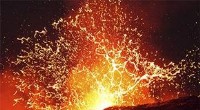
* Fiery bursts and glowing lava: Pliny also mentions "tongues of fire," which likely refer to pyroclastic flows - superheated currents of gas, ash, and rock that raced down the volcano's slopes.
* Ash fall: The eruption spewed an incredible amount of ash, burying Pompeii and Herculaneum under a thick layer. This ash fall would have been dark and suffocating, with the sky turning a sickly yellow or grey.
* Earthquakes and tremors: The eruption was preceded by a series of earthquakes, which would have caused widespread panic and damage.
The Aftermath:
* Desolation: After the eruption, the landscape around Mount Vesuvius would have been a desolate wasteland, covered in ash and pumice.
* The buried cities: Pompeii and Herculaneum were buried beneath layers of volcanic material, preserving them in a time capsule.
Imagine this:
* A terrifying, billowing cloud rising high into the sky, casting a menacing shadow over the surrounding area.
* Fiery explosions and glowing rivers of lava flowing down the volcano's slopes.
* A suffocating blanket of ash falling from the sky, burying everything in its path.
* The ground shaking violently, sending tremors that would have been terrifying.
It would have been a truly apocalyptic event, unlike anything ever witnessed before.
For a more vivid understanding, I recommend reading the accounts of Pliny the Younger and exploring archaeological evidence of the eruption. You can also find many reconstructions and illustrations that attempt to depict the eruption, though these are obviously interpretations.