1. Plate Tectonics:
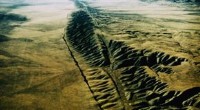
* Continental Drift: Earth's crust is divided into large plates that move slowly across the mantle. This movement, called continental drift, has reshaped continents, created mountains, and driven volcanic activity.
* Subduction Zones: Where plates collide, one plate can be forced under the other, leading to volcanic arcs, deep ocean trenches, and earthquakes.
* Seafloor Spreading: New oceanic crust is created at mid-ocean ridges, where plates pull apart, and then spreads outwards.
2. Rock Cycle:
* Sedimentary Rocks: Formed from the accumulation and cementation of sediments, such as sand, silt, and shells. They provide evidence of past environments and life forms.
* Igneous Rocks: Formed from the cooling and solidification of molten rock (magma or lava). They reveal information about the Earth's interior and volcanic activity.
* Metamorphic Rocks: Formed when existing rocks are transformed by heat, pressure, or chemical reactions. They provide insights into past geological events and processes.
3. Uniformitarianism:
* The Present is the Key to the Past: The processes that shape the Earth today, like erosion, sedimentation, and volcanism, have been operating for millions of years. By understanding these processes, we can interpret Earth's past.
4. Superposition and Faunal Succession:
* Superposition: In undisturbed rock layers, the oldest rocks are at the bottom and the youngest are at the top.
* Faunal Succession: Fossil assemblages are characteristic of specific geological periods and can be used to date rocks and understand the evolution of life.
5. Evolution and Extinction:
* Biosphere Evolution: Life on Earth has evolved over billions of years, from single-celled organisms to complex ecosystems. This evolution is documented in the fossil record and driven by natural selection.
* Mass Extinctions: Periodic events in Earth's history have caused widespread extinction, altering the course of life and creating opportunities for new species to emerge.
6. Climate Change:
* Natural Cycles: Earth's climate has naturally fluctuated throughout its history, driven by factors like solar radiation, volcanic activity, and plate tectonics.
* Anthropogenic Influence: Human activities are now significantly impacting the climate, leading to warming temperatures and changes in weather patterns.
7. Impact Events:
* Meteorite Impacts: Large impacts from asteroids and comets have caused significant geological and biological disruptions throughout Earth's history.
These principles provide a framework for understanding Earth's history and how the planet has evolved into the dynamic world we know today. By studying the rocks, fossils, and landforms, scientists can reconstruct past events and processes, unravel the mysteries of Earth's deep past, and predict future changes.