Overall Movement:
* The Pacific Plate is moving northwestward relative to the North American Plate.
* This movement is approximately 46 millimeters per year.
Specific Locations:
* Northern California: The plates slide past each other horizontally in a transform fault. This is the classic example of the San Andreas Fault.
* Southern California: The motion is more complex, with a combination of horizontal sliding and vertical movement (where the Pacific Plate dives beneath the North American Plate). This leads to the formation of the Transverse Ranges (mountains like the San Gabriels) and the offshore trenches.
Consequences of the Motion:
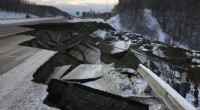
* Earthquakes: The constant movement and friction between the plates generates significant seismic activity. Major earthquakes, such as the 1906 San Francisco earthquake and the 1994 Northridge earthquake, are a direct result of this relative motion.
* Volcanic Activity: While not as active as other plate boundaries, the interaction of these plates can also lead to volcanic activity, particularly in Southern California.
* Landforms: The San Andreas Fault system has created a dramatic landscape, with fault scarps, offset river channels, and different geological formations on either side of the fault.
Visualizing the Motion:
Think of two large, flat pieces of a puzzle being pushed against each other. The Pacific Plate is being pushed northwesterly, causing it to slide past the North American Plate in a horizontal movement. The pressure and friction from this movement cause the earthquakes and other geological features we observe along the San Andreas Fault.