Relationship:
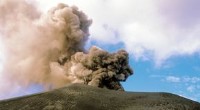
* All three are formed by volcanic eruptions. The fundamental difference lies in the type of magma and the way it erupts, which dictates the resulting shape and composition.
* They often coexist in volcanic fields. Large volcanic fields can contain multiple types of volcanoes, with shield volcanoes forming the base, followed by composite volcanoes on the flanks, and smaller cinder cones scattered around them.
Differences:
* Cinder cones:
* Form from explosive eruptions of basaltic lava. This lava is fluid and contains gas bubbles, leading to explosive eruptions that eject fragments called tephra (cinders).
* Have steep slopes, typically symmetrical cone shape. The cinders pile up around the vent, creating a cone-shaped structure.
* Small in size, usually less than 1,000 feet tall. They are the most common type of volcano.
* Composite volcanoes (stratovolcanoes):
* Form from alternating layers of lava flows and pyroclastic material. They are built up over time by layers of lava flows, ash, and volcanic debris.
* Have steeper slopes than shield volcanoes and are typically symmetrical cones. They are also known for their explosive eruptions, which can produce large, destructive pyroclastic flows.
* Larger and taller than cinder cones, often reaching several thousand feet tall. Examples include Mount Fuji and Mount Vesuvius.
* Shield volcanoes:
* Form from effusive eruptions of very fluid basaltic lava. These eruptions are relatively gentle, producing large volumes of lava that spread out over a wide area.
* Have broad, gently sloping shapes that resemble a warrior's shield. The lava flows build up over time, creating a broad, shield-like structure.
* The largest volcanoes on Earth, often covering hundreds of square miles. Examples include Mauna Loa and Kilauea in Hawaii.
Summary:
While each type of volcano is distinct, they all contribute to the diverse landscape of Earth's volcanic regions. Understanding their unique characteristics helps us predict potential hazards and appreciate the incredible power of volcanic processes.