More specifically, it's the ratio of the amount of electromagnetic radiation reflected by a surface to the amount of radiation incident on it.
Here's a breakdown:
* Radiation: Albedo deals with electromagnetic radiation, primarily in the visible light spectrum.
* Reflection: It measures how much of that radiation bounces back off the surface.
* Ratio: Albedo is expressed as a decimal or percentage, with 0 representing perfect absorption (no reflection) and 1 (or 100%) representing perfect reflection.
Examples:
* Fresh snow: Has a very high albedo, reflecting most of the sunlight that hits it.
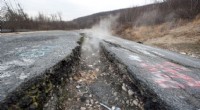
* Dark asphalt: Has a low albedo, absorbing most of the sunlight and getting very hot.
Importance:
Albedo plays a significant role in Earth's climate system. Surfaces with high albedo help to cool the planet by reflecting sunlight back into space. Surfaces with low albedo contribute to warming by absorbing more solar energy.