1. Earthquakes:
* When plates collide, slide past each other, or pull apart, they create friction and stress.
* This stress can build up over time until it is released suddenly, causing the ground to shake - an earthquake.
2. Volcanoes:
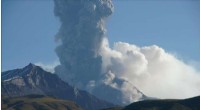
* Plate boundaries are where most volcanoes are found.
* When plates collide, one plate can slide under the other (subduction).
* This process melts the rock, creating magma that rises to the surface and erupts as lava.
3. Mountain Ranges:
* When two continental plates collide, they push against each other and cause the land to fold and buckle, creating mountain ranges.
* The Himalayas, the Alps, and the Andes are all examples of mountain ranges formed by plate collisions.
4. Ocean Trenches:
* Ocean trenches are deep canyons in the ocean floor that are formed when one plate subducts under another.
* The Mariana Trench, the deepest part of the ocean, is an example of an ocean trench.
5. Mid-Ocean Ridges:
* Mid-ocean ridges are underwater mountain ranges where new ocean floor is created.
* When plates pull apart (diverge), magma rises from the mantle and cools to form new crust.
6. Continental Drift:
* The theory of continental drift states that the continents have moved over time, and that they are still moving today.
* This movement is caused by the slow but continuous movement of the Earth's plates.
7. Formation of Continents:
* Plate tectonics is responsible for the formation of continents.
* Over millions of years, plates have collided and merged, creating the continents we see today.
8. Landforms:
* Plate tectonics is responsible for the formation of many of the Earth's landforms, including mountains, valleys, canyons, and plateaus.
9. Climate Change:
* Plate tectonics can influence climate change by affecting ocean currents and the distribution of landmasses.
10. Natural Resources:
* Plate tectonics is responsible for the formation of many natural resources, including minerals, oil, and gas.
In summary, the Earth's plates are constantly moving and interacting, causing a wide range of geological phenomena that shape our planet.