Here's a breakdown:
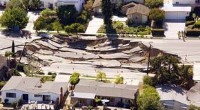
* Fracture: A break or crack in the Earth's crust.
* Mass of rocks in motion: This indicates movement along the fracture, which is the defining characteristic of a fault.
Faults are formed when the stress on the Earth's crust exceeds the strength of the rocks. This stress can be caused by various factors, including:
* Tectonic plate movement: The movement of the Earth's tectonic plates is the primary driver of faulting.
* Volcanic activity: Magma rising beneath the surface can also cause stress and lead to faulting.
* Earthquakes: Earthquakes are a result of sudden movement along a fault, releasing stored energy.
There are different types of faults, categorized by the direction of movement:
* Normal faults: Rocks move downward relative to each other.
* Reverse faults: Rocks move upward relative to each other.
* Strike-slip faults: Rocks move horizontally past each other.
Faults play a crucial role in shaping the Earth's surface and are associated with various geological phenomena, including earthquakes, mountain ranges, and volcanic activity.