Key Features:
* Plate Tectonics: The lithosphere is broken into massive plates that are constantly moving, interacting, and shifting. This process is called plate tectonics.
* Continents & Ocean Basins: The lithosphere forms the continents and the ocean floor.
* Volcanism & Earthquakes: Plate interactions are responsible for volcanic activity and earthquakes.
* Mountain Formation: Collision of tectonic plates leads to mountain formation.
* Seafloor Spreading: At mid-ocean ridges, new oceanic lithosphere is created as magma rises and cools.
* Subduction: At subduction zones, one plate dives beneath another, recycling the lithosphere.
Current State:
* Ongoing Plate Movement: Plate tectonic activity continues at a rate of a few centimeters per year.
* Major Plate Boundaries: The Earth's major plate boundaries are well-defined and continue to drive geological processes.
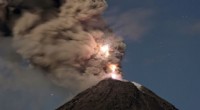
* Volcanic Activity: Volcanoes are active worldwide, with hotspots and subduction zones being prominent locations.
* Earthquake Activity: Earthquakes occur regularly, with some areas more prone than others due to plate interactions.
* Erosion & Weathering: External forces like wind, water, and ice continuously sculpt and erode the lithosphere.
* Climate Change Impacts: Rising sea levels and changing climate patterns are impacting coastal regions and causing shifts in the Earth's geological processes.
Research & Monitoring:
Scientists continually study and monitor the lithosphere through various techniques:
* Seismic Monitoring: Using seismometers to detect and analyze earthquake waves.
* Geodetic Techniques: Measuring changes in the Earth's surface using GPS and other methods.
* Volcanic Monitoring: Observing and analyzing volcanic activity through seismic signals, gas emissions, and ground deformation.
* Satellite Imagery: Providing detailed maps and observations of Earth's surface changes.
Significance:
Understanding the current state of the lithosphere is crucial for:
* Predicting Natural Disasters: Forecasting earthquakes and volcanic eruptions to mitigate risks.
* Resource Management: Locating and managing natural resources like minerals and energy.
* Climate Change Research: Studying how lithosphere processes interact with climate change.
* Human Development: Understanding geological risks and opportunities for infrastructure and urban planning.
In essence, the lithosphere is a dynamic system in constant flux, shaped by geological processes that are both fascinating and powerful.