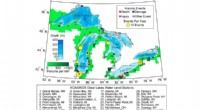
1. Location: This theme addresses where things are located. It involves understanding:
* Absolute location: Precise coordinates using latitude and longitude.
* Relative location: Describing a place's position in relation to other places.
By understanding location, geographers can analyze the impact of a place's position on its culture, economy, and environment.
2. Place: This theme focuses on what makes a place unique. It explores:
* Physical characteristics: Landforms, climate, vegetation, and water bodies.
* Human characteristics: Culture, language, religion, and economic activities.
By understanding place, geographers can analyze the interplay between human and physical factors that shape a region's identity.
3. Human-Environment Interaction: This theme investigates the relationships between humans and their surroundings. It explores:
* How humans adapt to their environment: Developing technologies and practices to cope with challenges.
* How humans modify their environment: Transforming landscapes for agriculture, transportation, and other purposes.
* The consequences of human actions on the environment: Pollution, resource depletion, and climate change.
By understanding human-environment interaction, geographers can analyze the impacts of human activity on the environment and propose solutions for sustainable development.
4. Movement: This theme focuses on how people, goods, ideas, and information move across the Earth's surface. It explores:
* Transportation networks: Roads, railways, waterways, and air routes.
* Communication technologies: Internet, phones, and social media.
* Migration patterns: Movement of people from one location to another.
By understanding movement, geographers can analyze the interconnectedness of places and the factors driving globalization.
5. Regions: This theme examines how areas are organized and grouped based on shared characteristics. It explores:
* Formal regions: Defined by common features like climate, language, or government.
* Functional regions: Defined by interactions and connections, such as economic or transportation networks.
* Perceptual regions: Defined by people's subjective perceptions and cultural understandings.
By understanding regions, geographers can analyze the patterns of diversity and homogeneity across the Earth's surface.
In essence, the five themes of geography provide a framework for studying the world in a holistic and integrated manner, highlighting the connections between human and physical systems and emphasizing the interconnectedness of places. This holistic approach allows geographers to identify patterns, analyze trends, and ultimately contribute to a deeper understanding of our world.