* Sonar (Sound Navigation and Ranging): This is the most common method. It involves sending sound waves down to the ocean floor and measuring the time it takes for the sound to return. This allows scientists to calculate the depth of the ocean floor.
* Satellite Altimetry: Satellites equipped with radar can measure the height of the ocean surface. By analyzing variations in the height, scientists can infer the shape of the ocean floor beneath.
* Multibeam Sonar: A more advanced form of sonar that uses multiple beams of sound to create a detailed map of the ocean floor.
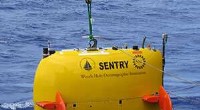
* Autonomous Underwater Vehicles (AUVs): These robots can be programmed to explore the ocean floor and collect data, including detailed bathymetry (depth) measurements.
* Remotely Operated Vehicles (ROVs): These are tethered underwater robots that can be controlled from the surface to collect data and take images of the ocean floor.
The method that is NOT currently used by ocean scientists to map the topography of the floor is:
* Direct Observation: While divers and submersibles can observe the ocean floor directly, this method is limited to small areas and depths. It's not practical for mapping large areas of the ocean floor.
Let me know if you'd like more details on any of these methods!