Background radiation is a constant, low-level exposure to ionizing radiation from natural sources. It's everywhere we go and is a normal part of our environment. Here's how rocks, soil, and cosmic rays contribute:
1. Rocks and Soil:
* Radioactive elements: Rocks and soil contain naturally occurring radioactive elements like uranium, thorium, and potassium-40. These elements decay over time, emitting alpha, beta, and gamma radiation.
* Uranium and thorium: These heavy elements are found in varying concentrations throughout the Earth's crust. Their decay chains lead to the production of numerous radioactive isotopes, contributing significantly to background radiation.
* Potassium-40: A naturally occurring isotope of potassium, found in common minerals and rocks. It decays through beta emission, contributing to background radiation.
2. Cosmic Rays:
* High-energy particles: Cosmic rays are high-energy particles from outer space, primarily originating from the sun, other stars, and supernova explosions. These particles bombard Earth's atmosphere constantly.
* Atmospheric interactions: When cosmic rays interact with atoms in the atmosphere, they create secondary particles like muons, pions, and neutrons, which contribute to background radiation.
* Variation: Cosmic ray intensity varies with altitude and latitude. Higher altitudes and polar regions have greater cosmic ray flux.
The contribution of each source varies depending on location:
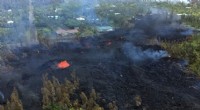
* Geologically active areas: Regions with granite bedrock or volcanic activity tend to have higher background radiation due to the presence of more radioactive elements.
* Coastal areas: Often have lower background radiation due to the influence of the sea, which acts as a natural shield against cosmic rays.
* Altitude: Higher altitudes have increased cosmic ray exposure, resulting in higher background radiation.
Overall:
Background radiation is a natural phenomenon, and its sources vary depending on location. Rocks, soil, and cosmic rays are the major contributors, and their presence is a reminder of the continuous energy exchange in the universe. While background radiation exposure is generally considered safe at typical levels, it's important to be aware of it and take precautions if necessary in high-exposure environments.