Cinder Cone Volcano
* Primarily Explosive: Cinder cones are known for their explosive eruptions.
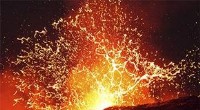
* Why? They are formed by the accumulation of tephra (fragments of rock, ash, and volcanic glass) ejected during relatively short-lived, violent eruptions. These eruptions are often driven by gas pressure and the rapid release of magma with a high gas content.
* Eruption Type: Typically Strombolian eruptions (moderate explosions of gas and lava fragments) are common, but they can also experience Hawaiian eruptions (effusive lava flows) in some cases.
Composite Volcano (Stratovolcano)
* Both Quiet and Explosive: Composite volcanoes are capable of both quiet and explosive eruptions, often in a cyclical pattern.
* Why? Their magma is usually more viscous (thicker) than that of shield volcanoes, leading to a build-up of pressure. They often erupt with a mix of lava flows and pyroclastic flows (fast-moving, hot, and deadly mixtures of gas and volcanic debris).
* Eruption Types:
* Explosive: Plinian eruptions (large, powerful eruptions with high ash columns) and Pelean eruptions (very explosive, with pyroclastic flows) are common.
* Quiet: Sometimes composite volcanoes also experience effusive eruptions, where lava flows slowly out of the vent.
Shield Volcano
* Primarily Quiet: Shield volcanoes are famous for their gentle slopes and effusive lava flows.
* Why? Their magma is very fluid (low viscosity), allowing for large-scale, steady flows of lava.
* Eruption Type: Hawaiian eruptions are the most common type, characterized by the formation of lava fountains and extensive lava flows. They can also experience Strombolian eruptions on occasion.
Important Note: While these are general guidelines, it's crucial to remember that volcanic eruptions are complex and can vary greatly.
* Different Volcanoes, Different Behaviors: Even within a single volcano type, the specific composition of the magma, the presence of gases, and other factors can influence the type of eruption.
* Predicting Eruptions is Difficult: Volcanoes can behave unpredictably, and while scientists strive to predict eruptions, it's not always possible to determine the exact type of eruption that will occur.