Understanding Latitude and Longitude
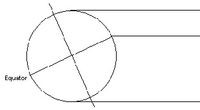
* Latitude: Imaginary lines that run east-west around the Earth, parallel to the equator. They measure your position north or south of the equator.
* Longitude: Imaginary lines that run north-south, converging at the poles. They measure your position east or west of the prime meridian (which passes through Greenwich, England).
Using Latitude and Longitude on a Map
1. Find the Grid: Most maps have a grid system with lines representing latitude and longitude.
* Latitude lines are usually horizontal and labeled with degrees (°).
* Longitude lines are usually vertical and also labeled with degrees (°).
2. Locate the Latitude: Find the latitude line on the map that corresponds to the latitude you're looking for.
3. Locate the Longitude: Find the longitude line on the map that corresponds to the longitude you're looking for.
4. The Intersection: The point where your latitude and longitude lines intersect is the location you are looking for.
Example:
Let's say you want to find the location with the coordinates 40.7128° N, 74.0060° W:
1. Latitude: Find the latitude line labeled 40.7128° N on the map.
2. Longitude: Find the longitude line labeled 74.0060° W on the map.
3. Intersection: The point where these two lines intersect should be in the area of New York City, which is the location of these coordinates.
Tips:
* Use a scale: Maps often have a scale to help you determine distances.
* Consider the map type: A globe is the most accurate way to visualize latitude and longitude, but maps can be flat representations of the Earth. Pay attention to the map projection used.
* Use online tools: Online map services like Google Maps or Bing Maps make it easy to enter coordinates and see the corresponding location.
Let me know if you want to explore more specific examples or have any other questions.