Here's a breakdown of key aspects of eddies in weather:
* Formation: Eddies form when there are differences in wind speed or direction, leading to a swirling motion. This can occur at the boundaries of weather systems like fronts, or even within jet streams.
* Characteristics: Eddies can vary in size and intensity, ranging from a few miles to hundreds of miles across. They can rotate clockwise or counterclockwise, depending on their location and the larger weather pattern.
* Impact on weather:
* Temperature: Warm eddies can bring warmer temperatures to an area, while cold eddies can bring colder temperatures.
* Precipitation: Eddies can influence the formation of clouds and precipitation. They can either enhance or suppress precipitation depending on their characteristics and the surrounding weather conditions.
* Wind: Eddies can create localized wind gusts and shifts in wind direction, which can affect surface conditions and create localized turbulence.
Examples of eddies:
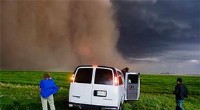
* Mesocyclones: These are rotating columns of air within thunderstorms that can produce tornadoes.
* Lee eddies: These are eddies that form on the leeward side of mountains, often creating favorable conditions for cloud formation and precipitation.
* Polar vortices: These are large-scale eddies that can extend down into the mid-latitudes, bringing cold air southward.
Understanding eddies helps meteorologists to more accurately forecast localized weather conditions and understand the complexities of atmospheric circulation.