Volcanoes:
* Scale of Destruction: Volcanoes are capable of causing massive destruction over a wide area, potentially affecting entire regions.
* Types of Damage:
* Lava Flows: Molten rock flowing down the slopes can incinerate everything in its path, destroying buildings, infrastructure, and vegetation.
* Pyroclastic Flows: Extremely hot, fast-moving currents of gas and rock fragments can obliterate everything in their path, often causing instant death.
* Ashfall: Volcanic ash can blanket entire regions, causing respiratory problems, damaging infrastructure, and disrupting transportation.
* Tsunamis: Underwater volcanic eruptions can trigger massive waves that devastate coastal areas.
* Climate Change: Large volcanic eruptions can release massive amounts of sulfur dioxide into the atmosphere, leading to global cooling.
* Duration: Volcanic eruptions can last for days, weeks, months, or even years.
* Predictability: While scientists can monitor volcanoes for activity, predicting eruptions with absolute accuracy is challenging.
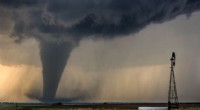
Tornadoes:
* Scale of Destruction: Tornadoes typically cause localized damage along a narrow path, but can be incredibly destructive within that path.
* Types of Damage:
* High Winds: Tornadoes can have wind speeds up to 300 mph, capable of tearing apart buildings, uprooting trees, and flinging debris.
* Flying Debris: Strong winds lift and hurl objects, causing significant damage to structures and posing a threat to life.
* Duration: Tornadoes are relatively short-lived, typically lasting only a few minutes.
* Predictability: While meteorologists can issue tornado warnings, predicting the exact location and intensity of a tornado is difficult.
Key Differences:
* Size and Scope: Volcanoes are much larger and have a far greater potential impact than tornadoes.
* Type of Damage: Volcanoes cause a wider range of damage, including lava flows, pyroclastic flows, ashfall, and tsunamis, while tornadoes primarily cause damage through high winds and flying debris.
* Duration: Volcanoes can erupt for extended periods, while tornadoes are short-lived events.
* Predictability: Predicting volcanic eruptions is more challenging than predicting tornadoes.
In summary, while both volcanoes and tornadoes can be extremely destructive, volcanoes have the potential to cause much more widespread and long-lasting damage due to their sheer size and the variety of hazards they pose.