1. Melting and Magma Generation:
* Partial Melting: Heat from the Earth's mantle causes rocks in the lower crust to partially melt. This process creates magma, a molten rock mixture that is less dense than the surrounding solid rock.
* Magma Movement: The buoyant magma rises through the crust, often accumulating in magma chambers.
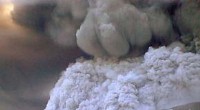
* Volcanic Activity: When magma reaches the surface, it erupts as lava, forming volcanoes.
2. Plate Tectonics:
* Convection Currents: Heat from the Earth's core drives convection currents in the mantle. These currents move large slabs of the Earth's crust, known as tectonic plates.
* Plate Boundaries: The interaction between tectonic plates at their boundaries is responsible for many geological features, including:
* Divergent Boundaries: Plates move apart, allowing magma to rise and create new crust (e.g., mid-ocean ridges).
* Convergent Boundaries: Plates collide, causing one plate to subduct beneath the other. This process can generate mountains, volcanoes, and earthquakes.
* Transform Boundaries: Plates slide past each other horizontally, causing earthquakes.
3. Deformation and Mountain Building:
* Folding: Heat and pressure from below cause rocks to bend and fold, forming mountains and valleys.
* Faulting: When rocks break under stress, they create faults. These faults can cause earthquakes and uplift blocks of the crust.
4. Isostasy and Uplift:
* Isostasy: The Earth's crust floats on the denser mantle, like a raft on water. When a region is heated, the crust expands and rises.
* Uplift: As magma rises beneath a region, it can push the crust upwards, creating domes or plateaus.
5. Thermal Springs and Geysers:
* Hydrothermal Activity: Heat from below can heat groundwater, which can then rise to the surface as hot springs or geysers.
In Summary:
The Earth's crust is a dynamic system that is constantly responding to heat from below. This heat drives plate tectonics, volcanic activity, mountain building, and other geological processes that shape our planet.