Here's a breakdown of its composition:
* Andesitic and dacitic lava flows: These make up the bulk of the volcano's structure. Andesitic lava is a viscous, intermediate type of lava that is common in stratovolcanoes. Dacitic lava is even more viscous and tends to form thick, dome-shaped structures.
* Pyroclastic material: This includes ash, pumice, and volcanic bombs, which are ejected during explosive eruptions.
* Volcanic breccia: This is a rock composed of angular fragments of other rocks that have been cemented together by volcanic ash.
* Conglomerate: This is a rock composed of rounded fragments of other rocks that have been cemented together by volcanic ash.
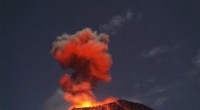
Mount Pinatuba's composition is typical of stratovolcanoes, which are known for their violent eruptions and the formation of steep, conical peaks. Its composition is also responsible for the volcano's characteristic layered structure, which is visible in its exposed slopes.