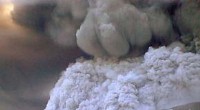
Tephra is a collective term for all the fragments of rock, ash, and other material ejected from a volcano during an eruption. It can range in size from microscopic ash particles to large volcanic bombs.
Here's a breakdown of different types of tephra:
* Ash: Fine, powdery particles less than 2 mm in diameter.
* Lapilli: Small, pebble-like fragments between 2 and 64 mm in diameter.
* Blocks: Large, angular fragments larger than 64 mm that solidify before being ejected.
* Bombs: Large, rounded or streamlined fragments larger than 64 mm that solidify during flight.
Tephra can have a devastating impact on the surrounding area, causing:
* Roof collapses: Heavy ash accumulation can weigh down roofs.
* Respiratory problems: Fine ash particles can irritate the lungs and cause breathing difficulties.
* Crop damage: Ash can blanket crops, hindering growth and causing damage.
* Air travel disruption: Ash clouds can pose a serious threat to aircraft engines.
Volcanic eruptions are a powerful force of nature, and understanding the different types of debris they produce is crucial for minimizing the risks they pose.