1. Geographic Isolation:
* As continents move apart, populations of organisms become separated by vast distances of ocean.
* This isolation prevents gene flow between the separated populations, leading to independent evolutionary trajectories.
* Different environmental pressures in each isolated landmass can lead to the development of distinct adaptations, eventually resulting in speciation.
2. Formation of Barriers and Habitats:
* Continental drift can create new geographic barriers such as mountains, deserts, and oceans, further isolating populations.
* Conversely, collisions between continents can create new habitats and opportunities for diversification.
* For example, the collision of India with Asia created the Himalayan mountains, which provided new environments for adaptation and speciation.
3. Climate Change:
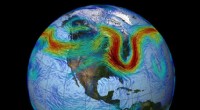
* The movement of continents influences global climate patterns.
* Continental drift can change ocean currents, wind patterns, and ice sheet formation, leading to shifts in temperature and precipitation.
* These climate changes can drive adaptive evolution, leading to the emergence of new species that are better suited to the changing environment.
4. Faunal Exchange:
* When continents collide, there can be a "faunal exchange" where species from different landmasses come into contact.
* This can lead to competition, predation, and hybridization, which can drive evolutionary change.
* For example, the exchange of faunas between North America and South America after the formation of the Isthmus of Panama led to a significant diversification of species in both continents.
Examples:
* The evolution of marsupials in Australia: The isolation of Australia due to continental drift allowed marsupials to evolve in unique ways, filling ecological niches that are occupied by placental mammals in other continents.
* The diversification of flowering plants: The breakup of Pangea and subsequent continental drift contributed to the wide distribution and evolution of flowering plants, leading to the incredible diversity we see today.
* The evolution of flightless birds: The isolation of continents led to the independent evolution of flightless birds like the ostrich in Africa, the emu in Australia, and the rhea in South America.
Conclusion:
Continental drift is a powerful force that has shaped the course of macroevolution. It has driven geographic isolation, created new habitats, influenced climate patterns, and facilitated faunal exchange, all of which have contributed to the incredible diversity of life on Earth.