1. Transform Faults:
* Large-scale faults: These are the defining feature of transform boundaries. They are often hundreds to thousands of kilometers long and can be very deep, reaching the Earth's mantle.
* Strike-slip motion: The plates move horizontally past each other along these faults. This motion can be either right-lateral (dextral) or left-lateral (sinistral), depending on the direction of the movement.
* Offset features: As plates slide past each other, geological features like mountains, ocean ridges, and even continents can be offset along the fault line.
2. Earthquakes:
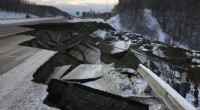
* Shallow earthquakes: Transform boundaries are responsible for generating shallow-focus earthquakes, typically within the upper 20 km of the Earth's crust.
* Frequent earthquakes: The constant friction and stress buildup along the fault zone lead to frequent earthquakes, often with significant magnitudes.
* Linear earthquake distribution: Earthquakes tend to occur along the length of the transform fault.
3. Linear Valleys and Ridges:
* Linear valleys: The movement along the fault can create long, narrow valleys where the land has been pulled apart.
* Linear ridges: In contrast, the movement can also create long, narrow ridges where the land has been pushed together.
4. Offsets in Other Features:
* Offsets in ocean ridges: Transform faults can offset mid-ocean ridges, creating a zig-zag pattern.
* Offsets in fracture zones: These are areas of broken and fractured rock that extend from the transform fault.
5. Lack of Volcanism:
* Unlike convergent and divergent boundaries, transform boundaries generally do not produce volcanoes. This is because there is no subduction or magma production at these boundaries.
Notable Examples of Transform Plate Boundaries:
* San Andreas Fault (California): One of the most famous examples, causing significant earthquakes in California.
* North Anatolian Fault (Turkey): Responsible for numerous earthquakes in Turkey, including the 1999 İzmit earthquake.
* Alpine Fault (New Zealand): A major fault that runs along the west coast of New Zealand.
It's important to note that: The features at a transform boundary can vary depending on the specific geology and tectonic setting. However, these features are common and help to define transform boundaries as distinct from other types of plate boundaries.