Here's a breakdown:
* Iceland sits on the Mid-Atlantic Ridge: This is a divergent plate boundary where the North American and Eurasian tectonic plates are moving apart. This separation allows magma from the Earth's mantle to rise to the surface, creating volcanic activity.
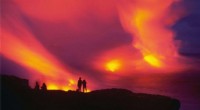
* Cracks are a natural part of volcanic activity: The "huge crack" you mention is likely a fissure that opened up during the eruption. These fissures are common in volcanic areas and are where the magma flows to the surface.
* The eruption is not a sign of impending disaster: While spectacular, the eruption is currently localized and poses no immediate threat to the majority of Iceland. The country has a long history of volcanic activity, and its people are well-prepared for such events.
It's important to rely on reputable sources of information, such as official Icelandic government websites and international news organizations, to get accurate and timely information about events like this.
To summarize: While the eruption is a significant event, it's a natural phenomenon that happens regularly in Iceland. There's no reason to believe it's a sign of something happening to the country as a whole.