Plate Tectonics and the Formation of Mountains:
* Convergent Plate Boundaries: Mountains are primarily formed at convergent plate boundaries, where tectonic plates collide.
* Subduction Zones: One plate (the denser one) dives beneath the other (subduction). This process generates magma, which rises to the surface, creating volcanoes. The collision also causes folding and uplift of the Earth's crust, forming mountain ranges. The Andes Mountains in South America and the Cascade Range in North America are examples of mountain ranges formed by subduction.
* Continental Collision: When two continental plates collide, neither plate subducts. Instead, the immense pressure causes the crust to buckle and fold, creating vast mountain ranges like the Himalayas.
Earthquakes and Plate Boundaries:
* Fault Lines: Convergent, divergent (plates moving apart), and transform (plates sliding past each other) boundaries all have fault lines, which are breaks in the Earth's crust.
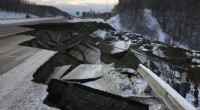
* Seismic Activity: The movement of plates along these fault lines is the primary cause of earthquakes. When the plates suddenly slip past each other, they release energy in the form of seismic waves.
* Epicenters: Earthquake epicenters are the points on the Earth's surface directly above the focus (the point where the earthquake originates within the Earth). These epicenters are often located along plate boundaries.
Volcanoes and Plate Boundaries:
* Subduction Zones: As mentioned earlier, subduction zones are the main locations for volcanic activity. The sinking plate melts, creating magma that rises to the surface and erupts.
* Hot Spots: Volcanoes can also form over "hot spots," which are areas of abnormally hot mantle rock. These hot spots can pierce through the crust, creating volcanic chains like the Hawaiian Islands.
Relationship Summary:
* Convergent Plate Boundaries: The most common locations for all three features: mountains, volcanoes, and earthquake epicenters.
* Subduction Zones: Subduction zones are particularly active in generating both volcanic activity and earthquakes.
* Continental Collisions: These collisions create mountain ranges and trigger earthquakes due to the immense pressure and friction.
* Transform Boundaries: While not as directly related to mountain formation, transform boundaries are major locations for earthquake activity.
In Conclusion:
The distribution of mountain ranges, earthquake epicenters, and volcanoes are closely tied to plate tectonics. Their locations, types, and intensity are all influenced by the interactions between tectonic plates. Studying these features helps us understand the dynamic nature of the Earth's crust and its ongoing evolution.