1. Naturally Occurring: Minerals are found in nature and not created in a lab.
2. Inorganic: They are not derived from living organisms.
3. Solid: Minerals exist in a solid state at normal temperatures and pressures.
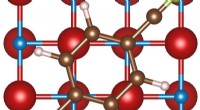
4. Crystalline Structure: The atoms in a mineral are arranged in a specific, repeating pattern, forming a crystal lattice. This gives minerals their characteristic shape and cleavage properties.
5. Definite Chemical Composition: Each mineral has a specific chemical formula, indicating the types and proportions of elements it contains.
6. Physical Properties: Minerals possess unique physical properties that help distinguish them from one another. These include:
* Color: Some minerals have distinctive colors, but color can be misleading as impurities can alter it.
* Streak: The color of the mineral's powder when rubbed against a streak plate.
* Hardness: A mineral's resistance to scratching, often measured on the Mohs Hardness Scale.
* Cleavage: The tendency to break along specific planes of weakness, producing smooth, flat surfaces.
* Fracture: The way a mineral breaks when it does not cleave.
* Luster: How light reflects off the mineral's surface (e.g., metallic, glassy, pearly).
* Density: The mineral's mass per unit volume.
7. Homogeneous: Minerals are uniformly composed throughout.
8. Specific Gravity: The ratio of the density of a mineral to the density of water.
Understanding these characteristics is crucial for identifying and classifying minerals.