Land:
* Supercontinent Formation: The landmasses of the Earth coalesced into a single supercontinent called Pangea. This massive landmass affected global climate patterns, leading to more extreme conditions and reduced biodiversity.
* Climate Change: The formation of Pangea disrupted ocean currents and caused major changes in global climates. The interior of Pangea became extremely arid, with vast deserts expanding.
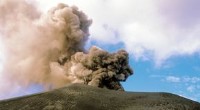
* Volcanic Activity: Massive volcanic eruptions released vast quantities of greenhouse gases, triggering a rapid warming event. This event led to a significant rise in global temperatures and ocean acidification.
* Reduced Coastal Areas: The formation of Pangea reduced the amount of coastline, leading to a decline in shallow marine habitats. This impacted marine organisms and their food sources.
Life-Forms:
* Mass Extinction: The Permian-Triassic extinction event, often referred to as the "Great Dying," was the most severe extinction event in Earth's history, wiping out over 90% of marine species and 70% of terrestrial species.
* Domination by Reptiles: The extinction of many animal groups paved the way for the diversification of reptiles, which thrived in the new, drier environments.
* Rise of Conifers: The extinction of many plant groups led to the rise of coniferous forests, which were better adapted to the arid conditions.
* Emergence of New Ecosystems: The dramatic changes in the environment and life-forms led to the development of new ecosystems, including the first true deserts.
Key Consequences:
* Biodiversity Loss: The extinction event significantly reduced global biodiversity, impacting ecosystems and food webs for millions of years.
* Evolutionary Shift: The extinction event cleared the way for the diversification of new life forms, setting the stage for the evolution of dinosaurs in the Mesozoic Era.
* Long-Term Impacts: The geological and biological changes at the end of the Paleozoic Era had lasting consequences, shaping the Earth's ecosystems and evolution for millions of years to come.
The end of the Paleozoic Era marks a pivotal point in Earth's history, a time of dramatic change that reshaped the planet's land and its inhabitants. The event served as a stark reminder of the fragility of life and the power of geological processes to reshape the planet.