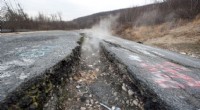
1. Weathering and Erosion: Limestone is susceptible to weathering and erosion by water, wind, and ice. Over time, these forces create cracks and fractures in the limestone's surface.
2. Bedding Planes: Limestone is a sedimentary rock formed by the accumulation and compaction of calcium carbonate-rich sediments. These sediments are deposited in layers, creating bedding planes. When limestone breaks, it often occurs along these bedding planes, which are natural lines of weakness.
3. Joints and Fractures: Joints are fractures in the rock that do not have significant displacement of the rock layers. Fractures, on the other hand, are breaks where there has been some movement of the rock. Both joints and fractures can provide pathways for water and other agents of weathering to enter the rock, further weakening it.
4. Chemical Dissolution: Limestone is composed primarily of calcium carbonate, which is soluble in water, especially acidic water. When water containing carbonic acid (formed when carbon dioxide from the atmosphere dissolves in water) seeps into the cracks and pores of limestone, it gradually dissolves the mineral, leading to the breakdown of the rock.
5. Mechanical Stress: Limestone can also break due to mechanical stress, such as the weight of overlying rock layers or tectonic forces. These forces can cause the limestone to fracture and break into smaller pieces.
6. Thermal Stress: Changes in temperature can cause limestone to expand and contract, leading to the development of cracks and fractures. For example, when limestone is exposed to high temperatures, such as during a wildfire, it can expand and break apart.
The specific pattern and mode of limestone breakage depend on the combination of these factors and the local geological conditions.