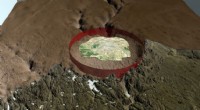
Extrasive rocks are classified based on their chemical composition and mineral content. The two main types of extrasive rocks are:
1. Felsic Rocks: These rocks are rich in silica (SiO2) and contain minerals such as quartz, feldspar, and mica. Examples of felsic extrasive rocks include rhyolite, dacite, and andesite.
2. Mafic Rocks: These rocks are lower in silica content and contain minerals such as pyroxene, olivine, and plagioclase feldspar. Examples of mafic extrasive rocks include basalt and scoria.
Extrasive rocks often form various volcanic features, such as lava flows, domes, cinder cones, and ash flows. The type of volcanic feature depends on the viscosity of the magma, gas content, and eruption style.
Extrasive rocks provide valuable insights into the Earth's interior, volcanic processes, and past geological events. They are studied by geologists and volcanologists to understand the structure and dynamics of the Earth's crust and to assess volcanic hazards.