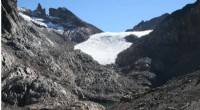
1. Weathering: Weathering is the process of breaking down and disintegrating rocks and minerals on the surface of the Earth. This process can be caused by various factors such as temperature changes, precipitation, chemical reactions, and biological activities. Weathering processes weaken the rocks and prepare them for erosion.
2. Erosion: Erosion is the process of transporting weathered materials away from their original location. In mountain ranges, erosion is primarily caused by water in the form of rainfall, runoff, and rivers. These erosional agents carry sediments and debris down slopes, leading to the formation of valleys, canyons, and gorges. Wind erosion can also play a role in arid and semi-arid regions.
3. Deposition: Deposition is the process by which eroded materials are deposited in new locations. In mountain ranges, deposition occurs when the energy of the erosional agents decreases. For instance, rivers may deposit sediments as they reach flatter areas, forming alluvial fans, deltas, and floodplains. Depositional processes can also lead to the formation of landforms such as moraines, which are formed by glaciers.
The combined effects of weathering, erosion, and deposition can significantly alter the topography and morphology of mountain ranges. Over millions of years, these processes can wear down mountains, creating more subdued landscapes. The erosion of mountains also supplies sediments to lowland areas, contributing to the formation of sedimentary basins and plains. Additionally, these processes can expose mineral resources and shape the overall geomorphology of a region.
Understanding these processes is crucial for studying Earth's surface processes, landscape evolution, and the management of mountain environments.