1. Plate Tectonics and Continental Drift: The movement of tectonic plates, driven by convection currents within the Earth's mantle, plays a pivotal role in mountain formation. In the case of the Pacific mountain ranges, the convergence of tectonic plates, specifically the subduction of oceanic plates beneath continental plates, is the primary mechanism behind their uplift.
2. Subduction Zones and Volcanic Activity: As one tectonic plate (usually oceanic) moves beneath another (usually continental), it descends into the Earth's mantle. The subducting plate melts due to the intense heat and pressure, forming magma. This magma rises to the surface through volcanic eruptions, building up volcanic edifices.
3. Compressional Forces and Crustal Thickening: The subduction of oceanic plates beneath continental plates creates immense compressional forces at the plate boundary. These forces cause the continental crust to thicken and uplift, resulting in the formation of mountain ranges. As the oceanic plate descends into the mantle, it also drags sediments and other materials from the seafloor, further contributing to the growth of the mountain ranges.
4. Collision and Orogeny: In certain cases, when two continental plates collide head-on, the resulting compressional forces can lead to intense mountain-building episodes known as orogenies. The collision of the Indian and Eurasian plates, for instance, gave rise to the towering Himalayas.
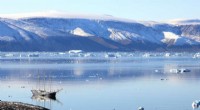
5. Erosion and Glaciation: After the initial uplift, mountain ranges are subjected to continuous erosion from wind, rain, and glaciers. Glaciers, particularly, can carve deep valleys and reshape mountain landscapes. Erosion contributes to the geomorphic diversity and spectacular scenery often associated with mountain ranges.
6. Faulting and Folding: Mountain ranges are also shaped by faulting and folding, which are geological processes that occur due to the deformation of the Earth's crust. Faulting involves the fracturing and displacement of rock layers, while folding leads to the bending and deformation of rock strata. These processes further modify the topography and structure of mountain ranges.
It's worth noting that the formation of mountain ranges is a dynamic and ongoing process. These geological processes take millions of years to shape and evolve the Earth's mountainous landscapes, and they continue to reshape these regions even today.