1. Weathering: Sediments originate from the weathering of rocks and minerals on the Earth's surface. Weathering can be caused by physical processes such as freezing and thawing, abrasion, and erosion by wind and water. Chemical weathering involves the breakdown of rocks due to reactions with water, oxygen, and acids.
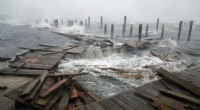
2. Erosion: Once weathered materials are loosened and broken down, they can be transported by various agents of erosion, such as water, wind, ice, and gravity. Erosion processes detach and carry away sediments from their original locations.
3. Transportation: Transported sediments can be moved over short or long distances depending on the erosive forces involved. Rivers, streams, and glaciers carry sediments through water flow. Wind can transport fine particles such as silt and sand, forming dunes and loess deposits. Gravity causes sediments to move downslope through processes like landslides and debris flows.
4. Deposition: When the energy of the transporting agent decreases, sediments are deposited in various environments. In river systems, sediments are deposited as the water flow slows down, forming sediment layers on riverbeds and floodplains. Lakes, estuaries, and oceans are also important sites of sediment deposition as water loses its velocity. Wind-blown sediments are deposited when wind speed decreases, creating sand dunes and desert deposits.
5. Compaction and Cementation: Over time, the weight of overlying sediments compresses and compacts the deposited materials, reducing porosity and increasing density. In addition, chemical processes such as cementation can occur, where minerals like calcite (calcium carbonate) or silica are deposited between sediment grains, binding them together and forming sedimentary rocks.
6. Lithification: The transformation of sediments into sedimentary rocks through compaction and cementation is known as lithification. Sedimentary rocks such as sandstone, limestone, and shale are formed through these processes over geological time scales.
7. Diagenesis: Diagenetic processes may further modify sediments after their deposition and lithification. These processes include chemical reactions, recrystallization, mineral replacement, and alteration of organic matter within the sediments. Diagenetic changes can result in the formation of new minerals, dissolution of unstable minerals, and the development of specific textures and structures in the sedimentary rocks.