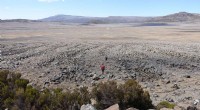
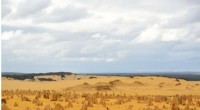
1. Coastal regions: Sandy soils are common along coastlines, where the sediment deposited by waves and currents over time can form sandy beaches and dunes.
2. Riverbeds and floodplains: When rivers carrying sediment overflow their banks during flooding or change their course, they can deposit sandy sediments on adjacent floodplains and create sandy soil.
3. Deserts: Deserts often have sandy soils due to a combination of factors such as low rainfall, strong winds, and limited vegetation. Wind erosion in arid environments can create large sand dunes or cover vast areas with sandy deposits.
4. Glacial deposits: Sandy soils can also be found in areas that were once covered by glaciers. When glaciers retreat, they leave behind large amounts of sediment, which can include sand and gravel, forming sandy soils.
5. Volcanic regions: Volcanic activity can produce volcanic ash and pumice, which, when weathered and eroded, can result in the formation of sandy soils in the surrounding areas.
The presence of sandy soil is closely linked to the geological history of a region and the processes that have shaped its landscapes.