1. Continental Drift: The movement of tectonic plates has caused continents to drift apart and collide, leading to the formation and breakup of supercontinents. For instance, the ancient supercontinent Pangea existed around 335 million years ago and gradually broke apart, giving rise to the separate continents we know today.
2. Mountain Building: Plate collisions and subduction zones have resulted in the formation of mountain ranges. The Himalayas, Andes, and Alps are examples of such orogenic belts that have been uplifted due to the collision of tectonic plates.
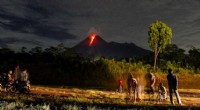
3. Volcanic Activity: Volcanic eruptions have played a vital role in shaping the Earth's surface. Lava flows, ash deposits, and pyroclastic material have contributed to the formation of volcanic landscapes, including mountains, plateaus, and islands.
4. Glaciations: Ice ages have caused glaciers to advance and retreat, sculpting the land through erosion and deposition. Glaciers have carved valleys, fjords, cirques, and moraines, leaving behind unique glacial landscapes.
5. River and Water Erosion: Rivers have carved deep valleys and canyons through their erosive power. Over millions of years, rivers have shaped landscapes and transported sediments to form deltas, floodplains, and alluvial fans.
6. Wind Erosion: In arid regions, wind erosion has created distinctive landscapes. Aeolian processes, such as sandblasting and saltation, have formed desert landforms like sand dunes, yardangs, and desert pavements.
7. Coastal Changes: Sea level fluctuations, influenced by factors like glacial cycles, tectonic movements, and changes in ocean currents, have altered coastlines over time. Coastal erosion, deposition, and the formation of landforms like beaches, cliffs, headlands, and estuaries have occurred.
8. Climate and Ecosystem Changes: Long-term climate variations have impacted ecosystems and biodiversity. Shifts in climate zones have led to changes in vegetation, the extinction of certain species, and the emergence of new ones.
9. Impact Events: Rare but significant events, such as asteroid impacts, have had profound effects on the Earth's surface. The Chicxulub impact crater, associated with the extinction of dinosaurs, is a notable example of how such events can reshape ecosystems.
10. Human Influence: In recent geological history, human activities have become a major agent of change. Deforestation, urbanization, infrastructure development, and land-use changes have significantly modified the Earth's surface.
These changes have occurred at different rates and scales, influenced by factors such as plate tectonics, climate fluctuations, natural disasters, and human interactions. The Earth's dynamic nature has led to the formation of diverse landscapes and environments that support complex ecosystems and habitats.