1. Origin: Earthquakes are caused by the sudden release of energy in the Earth's lithosphere, the rigid outermost layer of the planet. This energy is usually caused by the movement of tectonic plates or by volcanic activity. Volcanoes, on the other hand, are formed by the release of molten rock, called magma, onto the Earth's surface. Magma is generated deep within the Earth's crust or mantle, and it rises through cracks in the Earth's crust to reach the surface.
2. Location: Earthquakes can occur anywhere on the Earth's surface, but they are most common in areas along tectonic plate boundaries. These areas include the Pacific Ring of Fire, which is home to about 75% of the world's active volcanoes and earthquakes. Volcanoes, on the other hand, are typically found near tectonic plate boundaries, but they can also occur in other areas, such as hotspots. Hotspots are areas of intense volcanic activity that are not directly associated with tectonic plate boundaries.
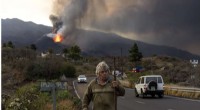
3. Impact on the Earth's Surface: Earthquakes can cause significant damage to buildings and infrastructure, especially if the earthquake is strong or occurs in an urban area. They can also trigger landslides and mudflows, and can even cause tsunamis if the earthquake occurs under the ocean. Volcanoes can have a similar impact on their surroundings, but they can also cause additional damage such as the emission of volcanic ash and gases, lava flows, and pyroclastic flows (fast-moving clouds of hot ash, gas, and rock fragments).
4. Frequency: Earthquakes are more frequent than volcanic eruptions. The Earth experiences millions of earthquakes each year, but only a small percentage of these are strong enough to cause significant damage. Volcanic eruptions, on the other hand, are less frequent, with major eruptions occurring every few years or even decades.
Overall, earthquakes and volcanoes are both powerful natural phenomena that can impact the Earth's surface and human society, but they differ in their origins, locations, effects, and frequency.