1. Troposphere
- The troposphere is the lowest layer of the atmosphere, extending from the Earth's surface to about 10 kilometers (6.2 miles) in altitude.
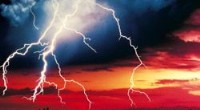
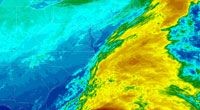
- This is where we live and breathe, and it contains the majority of the Earth's weather and climate systems.
- The temperature in the troposphere generally decreases with increasing altitude, and the air pressure decreases as well.
2. Stratosphere
- The stratosphere extends from about 10 km (6.2 mi) to about 50 km (31 mi) above sea level.
- It is home to the ozone layer, which absorbs the sun's ultraviolet (UV) radiation and protects life on Earth.
- The temperature in the stratosphere increases with increasing altitude, due to the absorption of solar radiation by the ozone layer.
3. Mesosphere
- The mesosphere extends from about 50 km (31 mi) to about 85 km (53 mi) above sea level.
- It is the coldest layer of the atmosphere, with temperatures reaching as low as -90 degrees Celsius (-130 degrees Fahrenheit).
- The mesosphere is also home to the famous "noctilucent clouds", which are composed of ice crystals and are visible only during the summer months at high latitudes.
4. Thermosphere
- The thermosphere is the hottest layer of the atmosphere, with temperatures reaching up to 2,000 degrees Celsius (3,632 degrees Fahrenheit).
- It is composed primarily of molecular nitrogen and oxygen, which are ionized by solar radiation, resulting in the beautiful auroras that are visible in the polar regions.
5. Exosphere
- The exosphere is the outermost layer of the atmosphere, extending from about 85 km (53 mi) above sea level to the edge of space.
- This layer is very thin, with air pressure decreasing rapidly with increasing altitude.
- The exosphere merges with the interplanetary space.