To understand this, we need to know a little bit about how water boils. Water boils when the vapor pressure of the water equals the pressure of the air around it. The vapor pressure of water is the pressure exerted by the water vapor molecules in the air. The higher the temperature of the water, the higher the vapor pressure.
When water is heated at sea level, the atmospheric pressure is about 14.7 pounds per square inch (psi). The vapor pressure of water at 100 degrees Celsius (212 degrees Fahrenheit) is also 14.7 psi. This means that at sea level, water boils at 100 degrees Celsius.
However, as we move up in altitude, the atmospheric pressure decreases. For example, at 1,000 meters (3,280 feet) above sea level, the atmospheric pressure is only about 12.2 psi. The vapor pressure of water at 93 degrees Celsius (199 degrees Fahrenheit) is also 12.2 psi. This means that at 1,000 meters above sea level, water boils at 93 degrees Celsius.
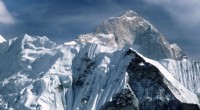
The higher we go in altitude, the lower the atmospheric pressure becomes, and the lower the boiling point of water becomes. This is why water boils faster in the mountains than at sea level.