Assessment Questions:
1. Compare and contrast warm fronts, cold fronts, and occluded fronts.
Warm Fronts:
- Move slowly
- Warm air rises in front of the warm front
- Brings cirrus clouds followed by low stratus clouds
- Precipitation: Drizzle, snow changing to rain
Cold Fronts:
- Move quickly
- Cold air pushes beneath the warm air, lifting it up
- Brings towering cumulonimbus clouds
- Precipitation: Heavy showers and thunderstorms
Occluded Fronts:
- Form when a cold front overtakes a warm front
- Complex cloud formations
- Precipitation: Varies, can include drizzle, rain, snow, or none at all
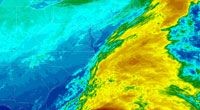
2. Predict the weather for the next few days based on the current weather map and your knowledge of how warm fronts, cold fronts, and occluded fronts move.
- In the next few days, the weather will change as a cold front approaches the area.
- The cold front will bring cooler temperatures, cloudy skies, and rain or snow.
3. Use the Gizmo to design an experiment to test the effect of ocean temperature on wind speed and direction.
Experiment:
1. Select two locations, one with warm ocean water and one with cold ocean water.
2. Place a weather station at each location.
3. Measure the wind speed and direction at each location over several days.
4. Compare the wind speed and direction at the two locations.
Expected Results:
The wind will be stronger over the warm ocean water and weaker over the cool ocean water.
- The wind will blow towards the cooler water.