Warm ocean currents are melting the undersides of Antarctic ice shelves, making them more vulnerable to collapse. This could lead to a significant rise in sea levels, threatening coastal communities around the world.
A new study, published in the journal Nature Geoscience, has found that warm water from the Indian Ocean is being transported to the Antarctic ice shelves by ocean currents. This warm water is then melting the ice shelves from below, causing them to thin and become more fragile.
The study's lead author, Dr. Pierre Dutrieux, from the British Antarctic Survey, said: "Our findings suggest that the Indian Ocean is playing a much more important role in the melting of Antarctic ice shelves than previously thought. This could have a significant impact on future sea level rise."
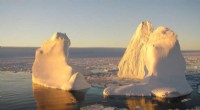
The Antarctic ice shelves are floating sheets of ice that surround the continent. They act as a barrier, preventing the ice sheets on the land from flowing into the ocean. If the ice shelves were to collapse, it would allow the ice sheets to flow into the ocean, causing sea levels to rise.
The study found that the warm water from the Indian Ocean is being transported to the Antarctic ice shelves by two main ocean currents. The first is the Agulhas Current, which flows along the east coast of Africa and then turns south towards Antarctica. The second is the Circumpolar Deep Water, which flows around the Antarctic continent.
The warm water from the Indian Ocean is then trapped beneath the ice shelves by the cold water of the Southern Ocean. This creates a layer of warm water that is constantly melting the ice shelves from below.
The study's findings are based on data from oceanographic buoys that were deployed near the Antarctic ice shelves. The buoys measured the temperature and salinity of the water, as well as the speed and direction of the ocean currents.
The study's authors say that their findings are a cause for concern. They say that the melting of the Antarctic ice shelves could lead to a significant rise in sea levels, which would have a devastating impact on coastal communities around the world.
The study's findings also highlight the importance of understanding the role of the ocean in the melting of Antarctic ice. They say that more research is needed to understand how the ocean currents are changing and how this is affecting the ice shelves.