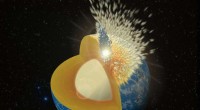
The Yellowstone hotspot is a result of the movement of the North American Plate over a fixed spot in the Earth's mantle, the layer of the Earth beneath the crust. As the plate moves, it passes over the hotspot, and the hot, molten rock from the mantle rises to the surface, creating volcanic activity.
The magma that rises from the Yellowstone hotspot is a type of rhyolite, a light-colored, silica-rich rock. This type of magma is highly explosive, and when it erupts, it can produce large amounts of ash and pumice.
The Yellowstone hotspot has produced three large volcanic eruptions in the past 2.1 million years. The most recent eruption, which occurred about 640,000 years ago, produced a caldera, a large depression in the Earth's surface caused by the collapse of a volcanic magma chamber. This caldera is now known as the Yellowstone Caldera.
The Yellowstone Caldera is about 55 miles (89 km) long, 35 miles (56 km) wide, and up to 2,000 feet (610 m) deep. It is one of the largest calderas in the world.
The Yellowstone hotspot is currently in a state of dormancy, but it is not extinct. Scientists believe that it is likely to erupt again in the future, although it is impossible to predict when this might happen.
If the Yellowstone hotspot were to erupt again, it would have a devastating impact on the United States. The eruption would produce large amounts of ash and pumice, which would block out the sun, cause global climate change, and disrupt air travel. The eruption would also release large amounts of toxic gases, which could kill people and animals.
The Yellowstone hotspot is one of the most dangerous geological hazards in the world. Scientists are closely monitoring the hotspot to try to predict when it might erupt again, so that preparations can be made to minimize the damage.